How to Buy Furniture from China: Step-by-Step Hotel Guide
Buying furniture from China is one of the most cost-effective decisions a hotel developer or commercial interior designer can make — if done correctly. Managed well, it can reduce FF&E costs by 30 to 50 percent compared to regional manufacturers while delivering hotel-grade quality. Managed poorly, it can result in delayed projects, quality disputes, and furniture that arrives damaged or wrong.
This step-by-step guide covers the complete process for buying furniture from China for hotel and commercial projects — from initial market research through factory selection, sampling, production, shipping, and delivery.
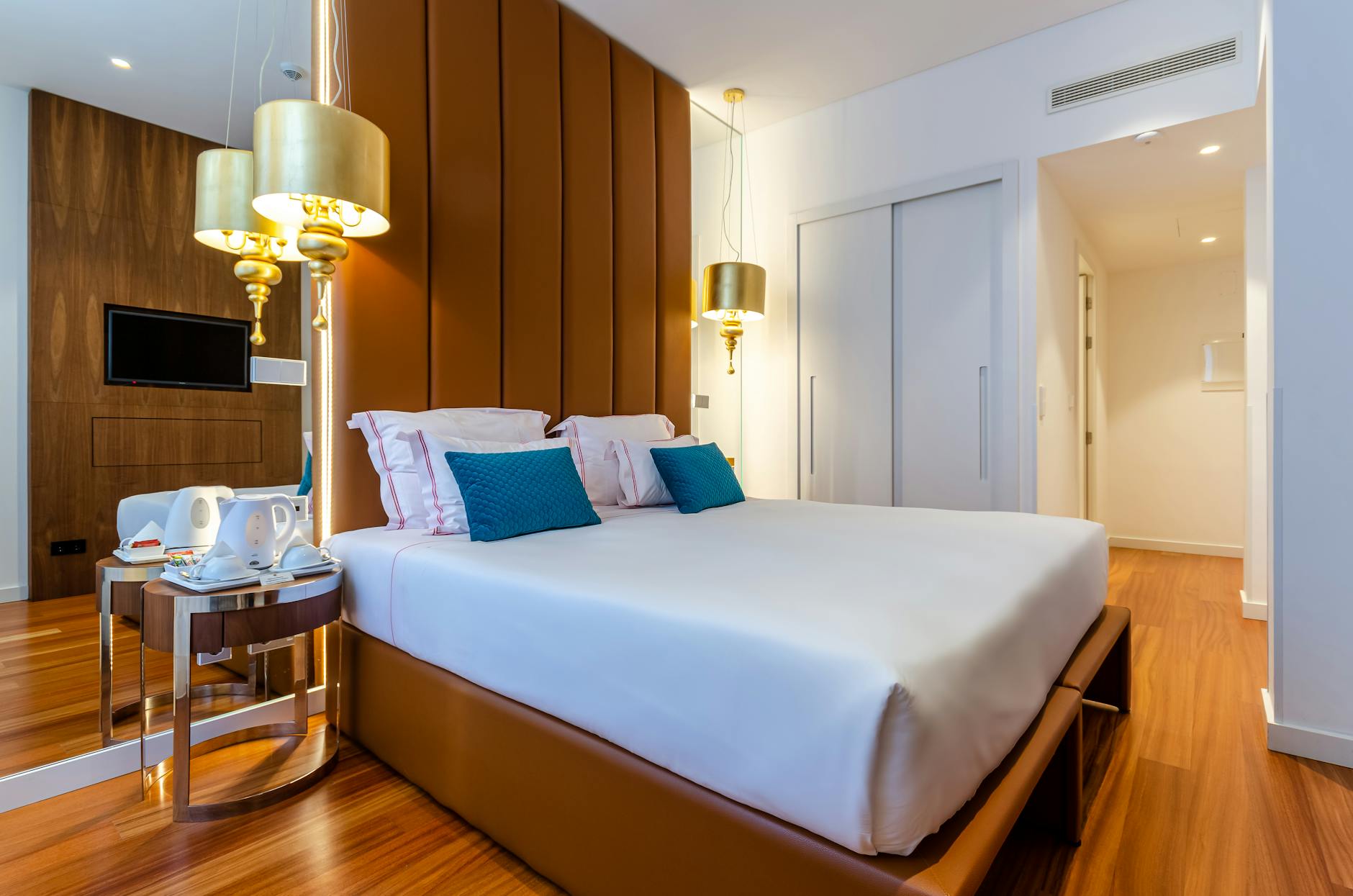
Step 1: Define Your Specification Before Approaching Factories
The most important preparation step when buying furniture from China is having a complete, detailed specification before you contact a single factory. Buyers who approach factories without clear specifications get highly variable quotations that cannot be compared meaningfully, and they invite factories to make material substitutions and specification shortcuts that will not become apparent until the furniture arrives.
A complete furniture specification includes:
- Technical drawings: Dimensioned drawings for each furniture item with tolerances. These do not need to be engineering-grade, but they need to clearly communicate the intended form and dimensions.
- Material specifications: Specify wood species or board type, grade, and construction. Do not say “solid wood” — specify whether you mean solid hardwood frame with engineered wood panels, or solid wood throughout, and what species.
- Finish specifications: Describe finish type (lacquer, veneer, laminate, paint), sheen level (matte, semi-gloss, high-gloss), and colour using a reference system (RAL, NCS, Benjamin Moore, or a physical sample).
- Hardware specifications: Specify hardware brand, model, or performance requirement for drawer slides, door hinges, and handles.
- Upholstery specifications: Fabric type, COM or factory-supplied, rub count requirement, colourway.
- Quantities: Room count with furniture items per room, plus public space items listed separately.
The more complete and precise your specification, the more accurate and comparable your factory quotations will be, and the less room for quality disputes during production.
Step 2: Identify the Right Manufacturing Region
For hotel and hospitality furniture, Foshan in Guangdong Province is the appropriate sourcing geography. Specifically:
- Lecong and Longjiang districts in Foshan — the core of the commercial furniture manufacturing cluster, with the highest concentration of export-focused contract furniture manufacturers
- Shunde district — strong in upholstered seating and some casegood manufacturers
- Dongguan — relevant for office furniture and metal-frame seating
Other regions — Shanghai, Zhejiang, Sichuan — have furniture industries but are less relevant for hotel contract furniture at competitive pricing. Foshan is where the supply chain is most developed and where the manufacturers with hotel project track records are concentrated.
Step 3: Source and Shortlist Manufacturers
Identifying qualified manufacturers is harder than it appears. The easiest channels — Alibaba, Global Sources, Made-in-China — give access to thousands of suppliers but provide limited information about actual production capability, and the self-reported quality claims on these platforms are unreliable.
More reliable approaches for finding qualified hotel furniture manufacturers:
- Industry trade shows: CIFF (China International Furniture Fair) in Guangzhou and the Foshan furniture industry exhibitions attract the significant manufacturers. In-person review of actual production samples is more informative than online profiles.
- Referral from other buyers: If you know other hotel developers or designers who have sourced from China, their factory recommendations carry far more weight than any directory listing.
- Sourcing agents: A qualified China furniture sourcing agent maintains curated factory networks built from project experience. Working with an agent removes the identification and vetting burden from the buyer.
- Direct factory research: For buyers planning to visit Foshan directly, the Lecong furniture market complex provides physical access to hundreds of manufacturer showrooms within a walkable area.
From your initial research, shortlist three to five manufacturers for each major furniture category. You are not looking for one factory to supply everything — you are building a small supply chain of specialist manufacturers.
Step 4: Request for Quotation and Factory Visits
Issue your RFQ (Request for Quotation) to your shortlisted manufacturers simultaneously, with a specified response deadline. Include your complete specification documents. Give factories two weeks to respond with itemised quotations.
Review the quotations critically. Significant price differences between manufacturers responding to the same specification are usually a signal that they are quoting different things — different materials, different construction methods, or different finish approaches. Request clarification before making any comparison.
Shortlist to two manufacturers per category and visit them before committing any order. A factory visit covering the showroom, production floor, finishing area, and QC stations — typically a half-day per factory — provides information that no amount of documentation review can replicate. The visit confirms whether the factory’s stated capability is reflected in their actual operation.
Step 5: Negotiate Terms and Issue Purchase Orders
Once you have selected your manufacturers, negotiate payment terms, delivery schedule, and warranty conditions before issuing a purchase order. Standard terms for first-time buyers are typically 30 to 50 percent deposit against PO, with balance due against copy of shipping documents. For order values above USD 500,000, consider a letter of credit for security.
Key contract terms to include:
- Delivery date with penalty provisions for delays beyond agreed tolerance (typically 14 days)
- Quality standard reference — specify that furniture must match approved samples
- Inspection rights — your right to conduct pre-shipment inspection before releasing balance payment
- Non-conformance resolution procedure — how defects are to be remedied
- Packing specification — type of protective packing required for sea freight

Step 6: Sampling and Approval
Before bulk production begins, go through a proper sampling process. This is not optional and cannot be compressed without accepting quality risk.
A standard sampling process includes:
- Finish sample panels (2–3 weeks): Physical samples of all specified finishes — veneers, lacquers, fabrics, hardware. Review and approve or request revisions before proceeding.
- Prototypes (3–5 weeks): Full-size prototype of each furniture item, or at minimum the most complex and highest-value pieces. Physically inspect prototypes before approving bulk production. Note any dimensions, finishes, or construction details that differ from specification.
- Pre-production sign-off: Once prototypes are approved and any revisions incorporated, issue written production authorisation. Keep a signed approval record with approved sample reference numbers that production can use as a quality baseline.
Buyers who skip the prototype stage or approve based on photographs rather than physical inspection frequently end up with bulk production that differs in some material way from what they expected. The cost of a prototype is typically USD 500 to 2,000 per item. The cost of receiving 200 guestroom packages that do not match specification is orders of magnitude higher.
Step 7: Production Oversight
During production, plan for two to three factory visits if you or your agent can access the factory. The most important timing points are:
- Mid-production visit (50% complete): Confirm materials being used match approved samples. Check finish quality on completed pieces. Flag any issues while sufficient production remains to make corrections.
- Pre-shipment inspection (production complete, before packing): Conduct a thorough inspection against approved samples. Check dimensions, finish, hardware operation, structural integrity, and quantity. This is your last opportunity to identify and require correction of non-conformances before the container is sealed.
If you cannot be on-site, engage a professional inspection firm or your sourcing agent to conduct these inspections and report findings with photographs.
Step 8: Shipping and Logistics
Hotel FF&E from China to Latin America is typically shipped in full container loads (FCL) by sea freight. Standard container sizes are 20-foot (approximately 25 cubic metres usable) and 40-foot (approximately 55 cubic metres usable). For a 100-room hotel project, expect five to fifteen 40-foot containers depending on furniture volume.
Key logistics considerations:
- Freight forwarder: Use a freight forwarder experienced with furniture and Latin American customs requirements. Furniture has specific HS codes that affect duty calculations, and some destination markets have specific import documentation requirements.
- Packing and loading supervision: Supervise or have your agent supervise container loading. Furniture that is improperly packed or loaded shifts during the sea voyage and arrives damaged.
- Customs documentation: Ensure all commercial invoices are accurate, origin certificates are in order, and any required compliance documentation for the destination country is obtained before shipment.
- Port of destination: Confirm your logistics chain from the destination port to the project site before the container ships. Port-to-site logistics are often the most expensive and complex final mile.

Common Mistakes When Buying Furniture from China
The same mistakes appear repeatedly in hotel furniture procurement projects. The ones with the highest cost consequences:
- Starting too late. The full procurement cycle — specification, sampling, production, shipping — takes 24 to 36 weeks. Buyers who start the process six months before a scheduled hotel opening are already at risk.
- Accepting the lowest quote without understanding why it is lowest. A factory quoting 30 percent below three competitors is almost certainly specifying different materials or lower construction standards. Request itemised quotation breakdowns before selecting on price.
- Skipping the factory visit. The information available from a two-hour factory walk-through cannot be obtained any other way. For an order above USD 200,000, the cost of a Foshan trip is easily justified.
- Releasing full payment before pre-shipment inspection. Pre-shipment inspection is only effective if you have leverage to require non-conformance correction. Once the balance is paid and the container is sealed, your ability to compel remediation is greatly diminished.
- Under-specifying packing requirements. Hotel furniture contains finished surfaces that scratch, veneer that chips, and upholstery that marks. Proper packing for sea freight — cardboard protection, foam wrapping, rigid crating for fragile items — is a specification requirement, not a factory discretionary choice.
Buying Furniture from China with Chinify
Chinify is a furniture sourcing agency based in Foshan that manages the complete process of buying hotel and commercial furniture from China for international clients. We handle factory identification and vetting, specification management, sampling coordination, production oversight, pre-shipment inspection, and logistics to destination port.
For hotel developers, interior designers, and real estate teams who want the cost advantages of Chinese manufacturing without the complexity of managing the process independently, Chinify provides a complete, end-to-end service. We have completed projects for hotel properties ranging from boutique resorts to 400-room branded hotels across Latin America.
If you have a hotel project requiring FF&E procurement and want to understand what buying furniture from China looks like in practice, contact Chinify to discuss your project requirements.