China Furniture Factory: How They Work & What Buyers Need to Know
Understanding how a China furniture factory operates is essential for any buyer sourcing commercial furniture for hotel or hospitality projects. The gap between a factory that can reliably produce hotel-grade furniture and one that cannot is not visible in a showroom visit or a product catalogue — it is embedded in production infrastructure, workforce capability, and quality management systems that only become apparent through direct factory observation.
This guide walks through the structure and operation of a Foshan furniture factory, what buyers should look for at each production stage, and how to use factory knowledge to make better sourcing decisions.
The Geography of China’s Furniture Factory Landscape
China’s furniture manufacturing is geographically concentrated. For hotel and hospitality furniture, the relevant geography is almost exclusively the Guangdong Province cluster centred on Foshan, with supporting districts in Dongguan and the Pearl River Delta.
Foshan contains an estimated 3,000 to 5,000 furniture manufacturers of varying scale, from small family workshops to large-scale operations employing hundreds of workers across multi-building factory complexes. The cluster’s competitive advantage is its density — raw material suppliers, hardware manufacturers, fabric and leather wholesalers, specialist finishing services, and packaging operations are all concentrated within the same geographical area, enabling short iteration cycles on samples and tight material delivery times during production.
The Lecong furniture market, located in Foshan’s Shunde district, is one of the largest furniture wholesale centres in the world — a complex of interconnected exhibition halls where manufacturers display their ranges. The market is useful as an initial survey of the sector, but the showroom presentations should never be mistaken for an assessment of production capability. The factory behind the showroom is the relevant evaluation unit.
Production Departments in a Furniture Factory
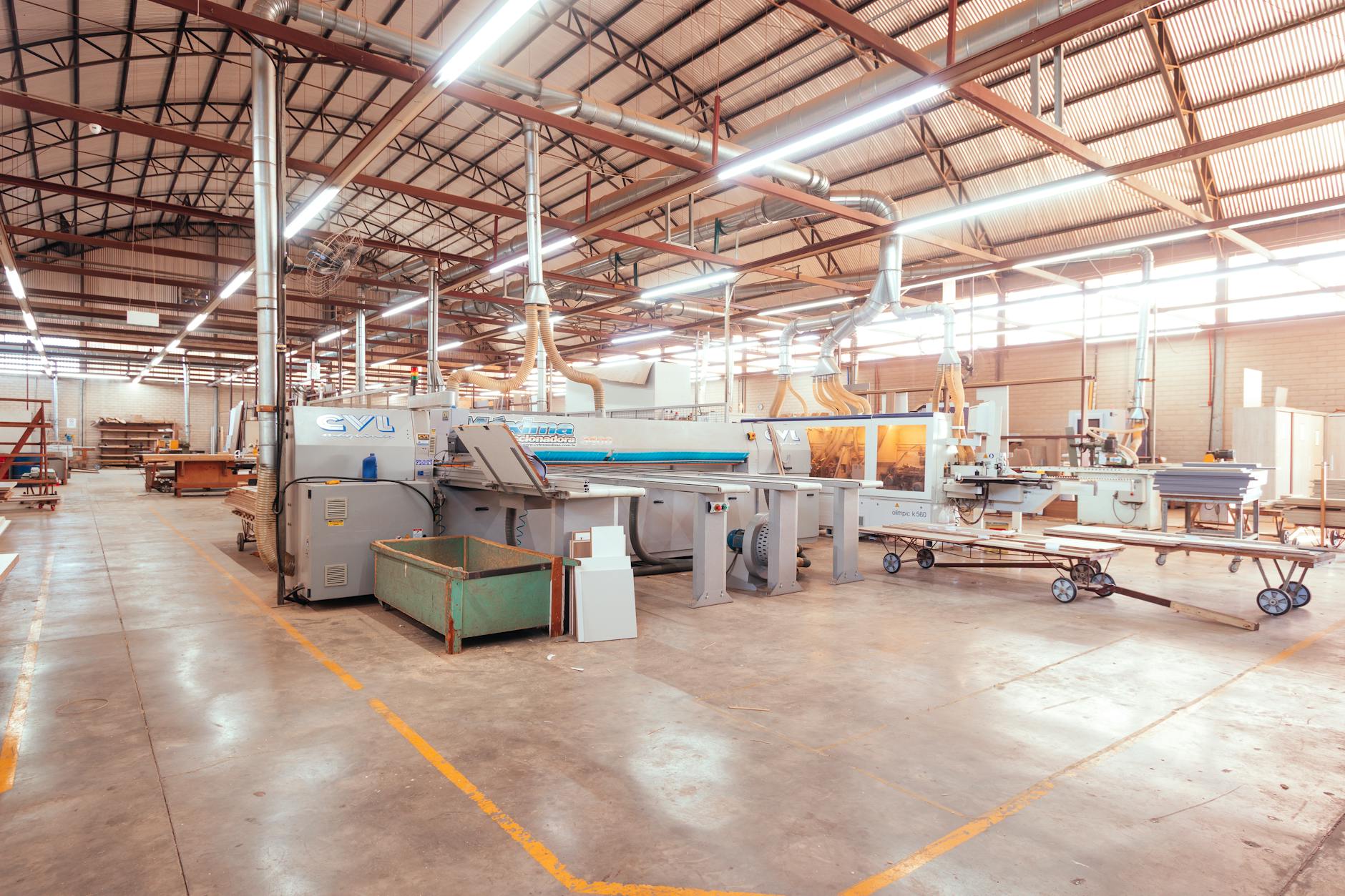
A full-capability furniture factory operates across several distinct production departments. Understanding each department’s function helps buyers know what questions to ask and what to observe during a factory visit.
Material Receiving and Storage
Raw materials — solid wood, MDF, particleboard, veneer sheets, hardware components, fabric and leather — arrive and are stored before entering production. Proper material management requires adequate covered storage, off-ground stacking to prevent moisture absorption, and for solid wood, a separate acclimation area where timber equilibrates to the factory’s ambient humidity before cutting. Factories that store wood materials improperly — outdoors, on bare ground, without humidity management — introduce dimensional instability into production that affects finished quality.
Cutting and Machining
Panel-based furniture begins with precision cutting of board materials using CNC panel saws. Solid wood components are cut to rough size then machined using CNC routers, spindle moulders, and other woodworking equipment to final profile. The precision of the cutting and machining department determines the consistency of component dimensions, which in turn determines whether assembled furniture meets specification tolerances. Factories with well-maintained CNC equipment and trained operators produce consistent components. Factories relying on older manual machinery and lower-skill operators produce higher variability.

Assembly
Components are assembled into furniture carcasses using a combination of mechanical fasteners (cam locks, screws, dowels) and adhesives. The joinery method — how panels are connected and reinforced — determines the long-term structural performance of the finished piece. Commercial-grade furniture for hotel use requires more robust joinery than residential furniture that will see lighter use. The assembly department should be evaluated for use of appropriate fastener specifications, consistent adhesive application, and structured quality checks at assembly completion.
Finishing
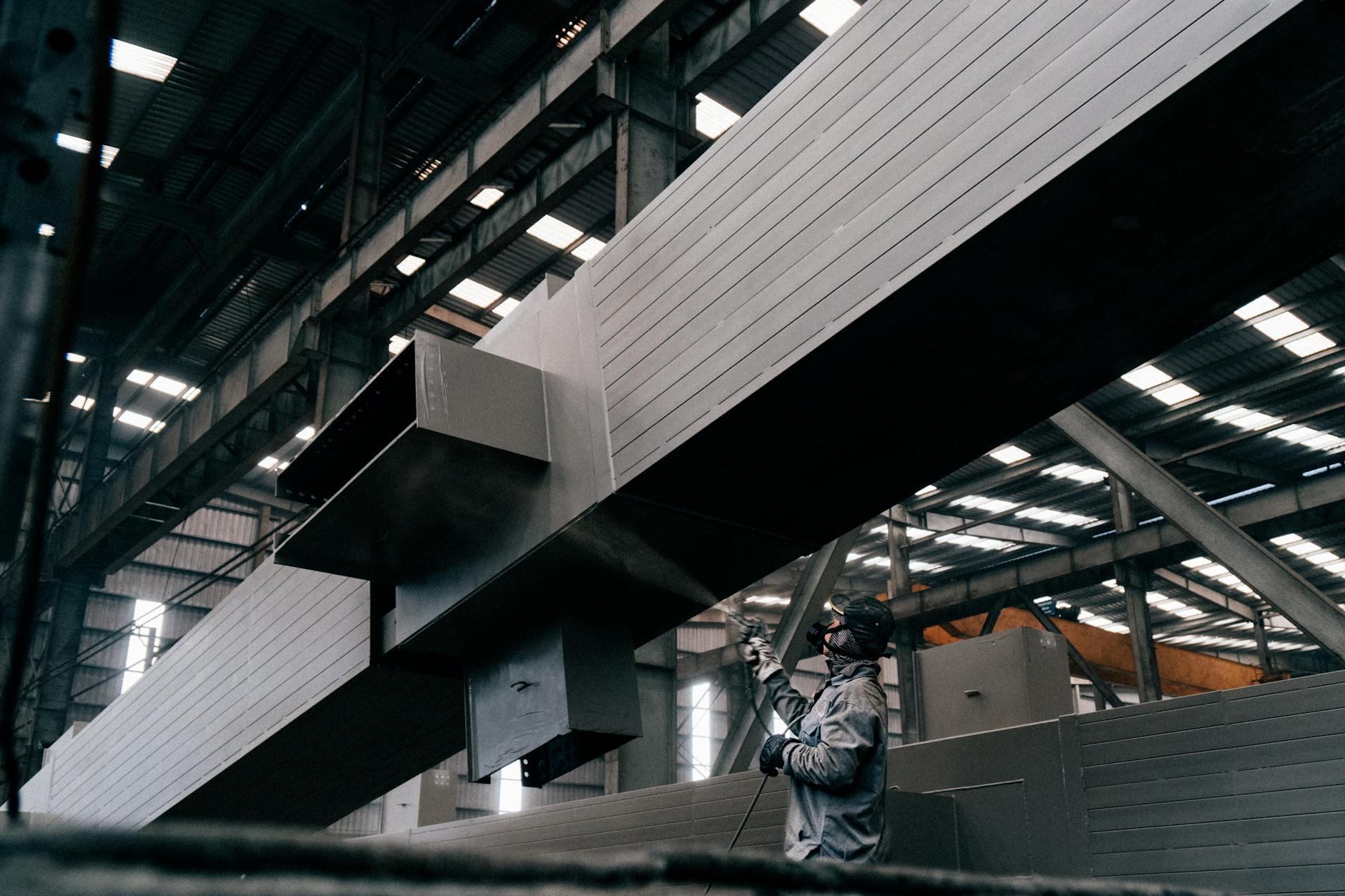
The finishing department is where most quality differentiation occurs. Furniture finishing involves surface preparation (sanding, filling), primer application, colour coat application (lacquer, paint, or stain), and topcoat application. Each stage requires specific conditions — controlled temperature and humidity, dust-free environment, adequate drying time between coats — that determine whether the finished surface is consistent, durable, and accurately represents the approved colour and sheen specification.
A well-equipped finishing department uses spray booths with adequate extraction, automated or semi-automated spray application for consistency, UV curing equipment for high-durability topcoats, and systematic quality checks at each stage. A poorly equipped finishing department produces finishes with inconsistent colour, visible sanding marks, dust nibs, and surfaces that fail prematurely under commercial use conditions.
Veneer Application
For furniture finished with natural wood veneer — common in upscale hotel casegoods — the veneer department applies thin wood veneer sheets to panel substrates using press bonding. Veneer work requires precise panel matching (ensuring grain and colour consistency across adjacent panels), accurate trimming, and careful handling to avoid damage to the fragile veneer surface before topcoat application. Factories with experience in veneered hotel furniture maintain organised veneer storage by batch, use calibrated press equipment, and have quality checks for delamination and surface defects.
Upholstery
Upholstered components — chair seats and backs, headboards, bench cushions, sofa cushions — are produced in a dedicated upholstery department. The department works from frame components (solid wood or metal) through spring and webbing installation, foam cutting and application, and final fabric or leather application. Upholstery quality depends on frame construction, the quality and density of foam specification, and the skill of upholsterers in achieving tight, consistent cover application. Factories without dedicated upholstery departments typically subcontract this work to specialist workshops — acceptable if the subcontractor is vetted, problematic if it is not.
Quality Control
In a well-managed furniture factory, quality control is not a single end-of-line inspection — it is integrated throughout the production process. Receiving inspection checks incoming materials against specification. In-process inspection at assembly checks component dimensions and joinery quality. Finishing inspection checks colour, sheen, and surface quality against approved samples. Final inspection before packing checks the complete piece against specification for dimensions, finish, hardware function, and structural integrity.
Factories with integrated QC programmes maintain inspection records, track defect rates by product and production run, and have formal non-conformance resolution procedures. Buyers should ask to review these records during factory visits — not because the numbers are always reliable, but because the presence or absence of systematic documentation is itself informative about quality management culture.
Packing and Dispatch
Furniture packing for export requires protection against the rigours of sea freight — vibration, compression from container loading, and moisture fluctuation. Adequate packing for hotel casegoods typically includes cardboard corner and edge protection, polythene wrap over finished surfaces, foam padding on high-risk areas, and structural crating for fragile or high-value items. The packing department is often the least scrutinised part of a factory visit but one of the most consequential — inadequate packing is a leading cause of transit damage that is not apparent until containers are opened at destination.
What Separates a Top-Tier China Furniture Factory from Mid-Tier
Buyers visiting Foshan factories for the first time often struggle to differentiate between factories of genuinely different capability. The observable differences between a top-tier hotel contract furniture factory and a mid-tier general furniture manufacturer include:
- CNC equipment investment: Top factories use multi-axis CNC machining centres that produce complex profiles with high precision and repeatability. Mid-tier factories rely more heavily on manual operations with associated variability.
- Dedicated hotel project division: Top-tier contract manufacturers have separate project management teams for hotel and commercial projects, with staff experienced in brand standard requirements and international project management.
- Finish sample library: A large, organised, current library of finish samples — veneers, lacquers, fabrics, hardware — indicates ongoing R&D investment and a production team that takes specification management seriously.
- Third-party inspection track record: Factories that regularly supply international hotel brands have experience with third-party inspection by firms like Bureau Veritas or SGS. Ask whether they have recent third-party inspection reports and request copies.
- Worker retention: Skilled furniture workers — particularly in finishing and upholstery — take years to develop. Factories with lower turnover produce more consistent quality. Ask about average worker tenure and how the factory manages skills retention.
Visiting a China Furniture Factory: A Practical Checklist
When planning a factory visit in Foshan, the following checklist helps ensure you cover the most important evaluation points:
Before the visit: Send your project specification in advance and request that the factory prepare finish samples and production examples relevant to your requirements. This transforms the visit from a general factory tour into a project-specific evaluation.
During the visit:
- Walk the entire production floor, not just the showroom. Request access to all departments.
- Ask to see the current order book and assess production scheduling against your timeline.
- Review finish samples against your specification requirements.
- Inspect current production pieces for finish quality, dimensional accuracy, and hardware installation.
- Ask to see a pre-shipment inspection report from a recently completed hotel project.
- Meet the project manager who would handle your account, not just the sales representative.
After the visit: Request a detailed quotation within five business days, specifying that quotations must be itemised by product with material specifications stated. Compare quotations across factories with the same specification baseline.
Chinify’s Factory Network
Chinify maintains an active network of vetted furniture factories in Foshan, selected through direct project experience across hotel and commercial interior assignments. We know which factories in the Foshan cluster are strongest for hotel casegoods, which produce the best quality commercial seating, and which are equipped for the complex custom fabrication requirements of high-specification hospitality projects.
If you are planning a hotel FF&E project and want to access Foshan’s best furniture factories with the assurance of independent vetting and ongoing quality oversight, contact Chinify to discuss your project.