China Furniture Factory: How They Work & What Buyers Need to Know
Understanding how a China furniture factory operates is essential for any buyer sourcing commercial furniture for hotel or hospitality projects. The gap between a factory that can reliably produce hotel-grade furniture and one that cannot is not visible in a showroom visit or a product catalogue — it is embedded in production infrastructure, workforce capability, and quality management systems that only become apparent through direct factory observation.
This guide walks through the structure and operation of a Foshan furniture factory, what buyers should look for at each production stage, and how to use factory knowledge to make better sourcing decisions.
The Geography of China’s Furniture Factory Landscape
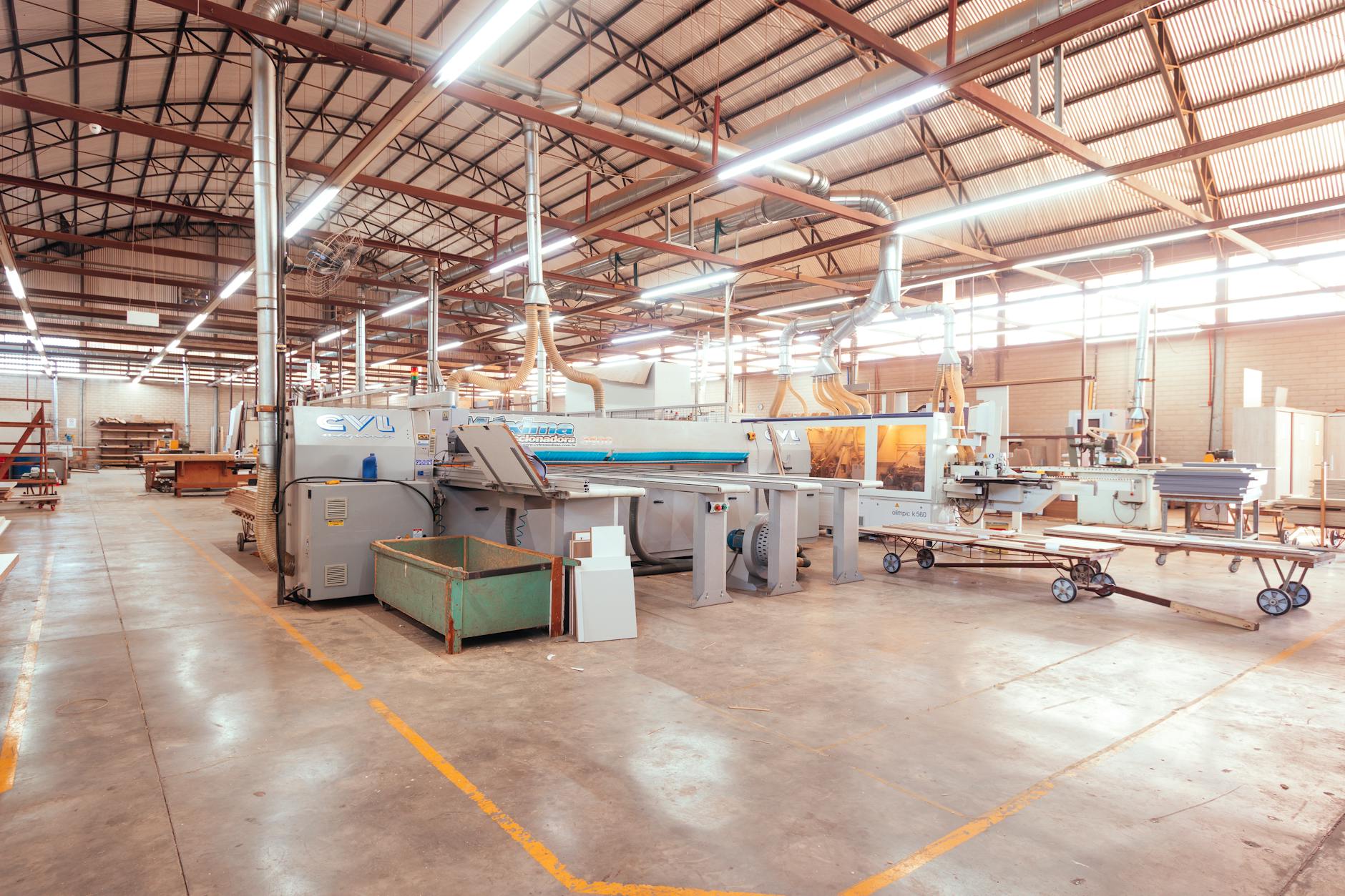
China’s furniture manufacturing is geographically concentrated. For hotel and hospitality furniture, the relevant geography is almost exclusively the Guangdong Province cluster centred on Foshan, with supporting districts in Dongguan and the Pearl River Delta.
Foshan contains an estimated 3,000 to 5,000 furniture manufacturers of varying scale, from small family workshops to large-scale operations employing hundreds of workers across multi-building factory complexes. The cluster’s competitive advantage is its density — raw material suppliers, hardware manufacturers, fabric and leather wholesalers, specialist finishing services, and packaging operations are all concentrated within the same geographical area, enabling short iteration cycles on samples and tight material delivery times during production.
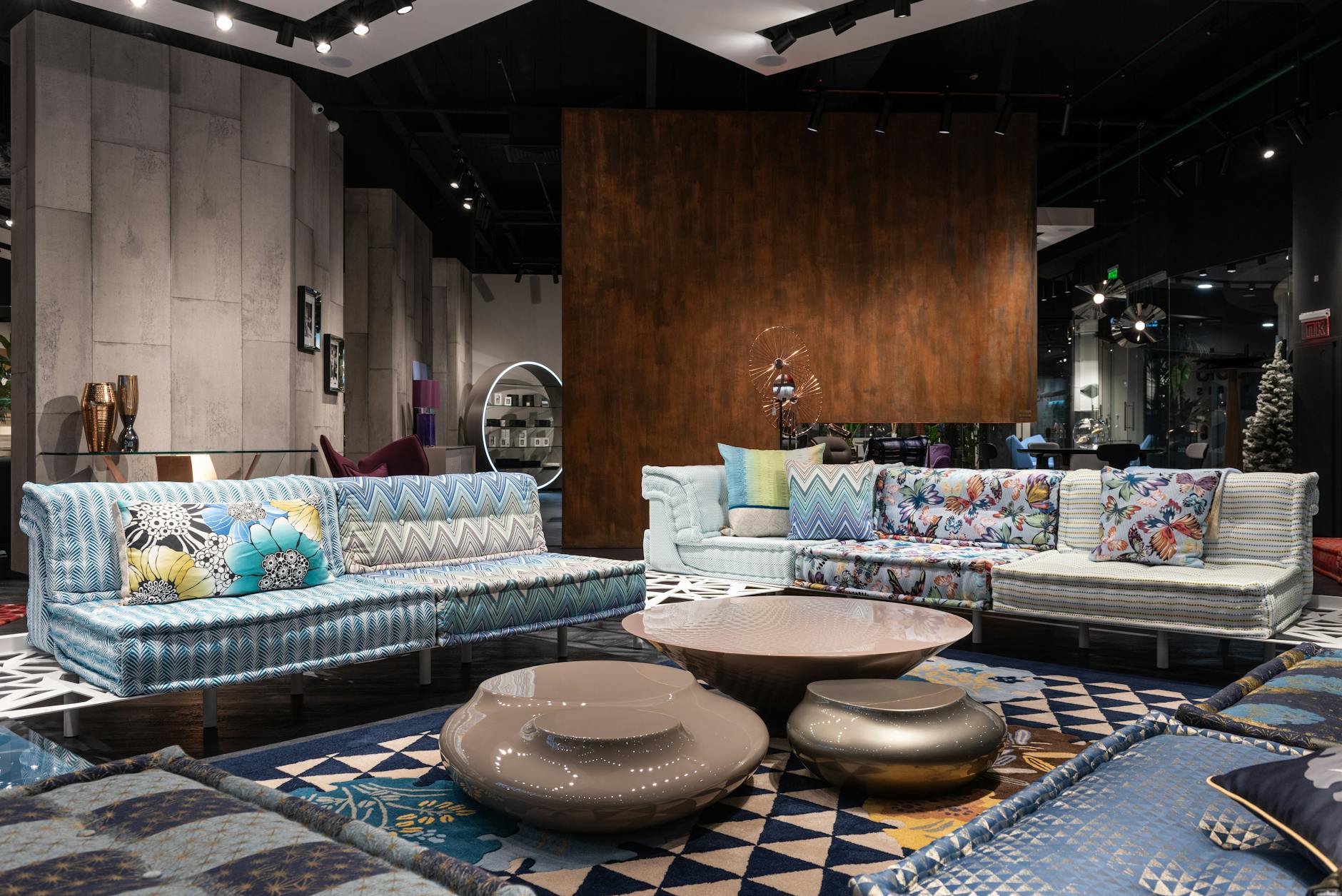
The Lecong furniture market, located in Foshan’s Shunde district, is one of the largest furniture wholesale centres in the world — a complex of interconnected exhibition halls where manufacturers display their ranges. The market is useful as an initial survey of the sector, but the showroom presentations should never be mistaken for an assessment of production capability. The factory behind the showroom is the relevant evaluation unit.
Production Departments in a Furniture Factory
A full-capability furniture factory operates across several distinct production departments. Understanding each department’s function helps buyers know what questions to ask and what to observe during a factory visit.
Material Receiving and Storage
Raw materials — solid wood, MDF, particleboard, veneer sheets, hardware components, fabric and leather — arrive and are stored before entering production. Proper material management requires adequate covered storage, off-ground stacking to prevent moisture absorption, and for solid wood, a separate acclimation area where timber equilibrates to the factory’s ambient humidity before cutting. Factories that store wood materials improperly — outdoors, on bare ground, without humidity management — introduce dimensional instability into production that affects finished quality.
Cutting and Machining
Panel-based furniture begins with precision cutting of board materials using CNC panel saws. Solid wood components are cut to rough size then machined using CNC routers, spindle moulders, and other woodworking equipment to final profile. The precision of the cutting and machining department determines the consistency of component dimensions, which in turn determines whether assembled furniture meets specification tolerances. Factories with well-maintained CNC equipment and trained operators produce consistent components. Factories relying on older manual machinery and lower-skill operators produce higher variability.

Assembly
Components are assembled into furniture carcasses using a combination of mechanical fasteners (cam locks, screws, dowels) and adhesives. The joinery method — how panels are connected and reinforced — determines the long-term structural performance of the finished piece. Commercial-grade furniture for hotel use requires more robust joinery than residential furniture that will see lighter use. The assembly department should be evaluated for use of appropriate fastener specifications, consistent adhesive application, and structured quality checks at assembly completion.
Finishing
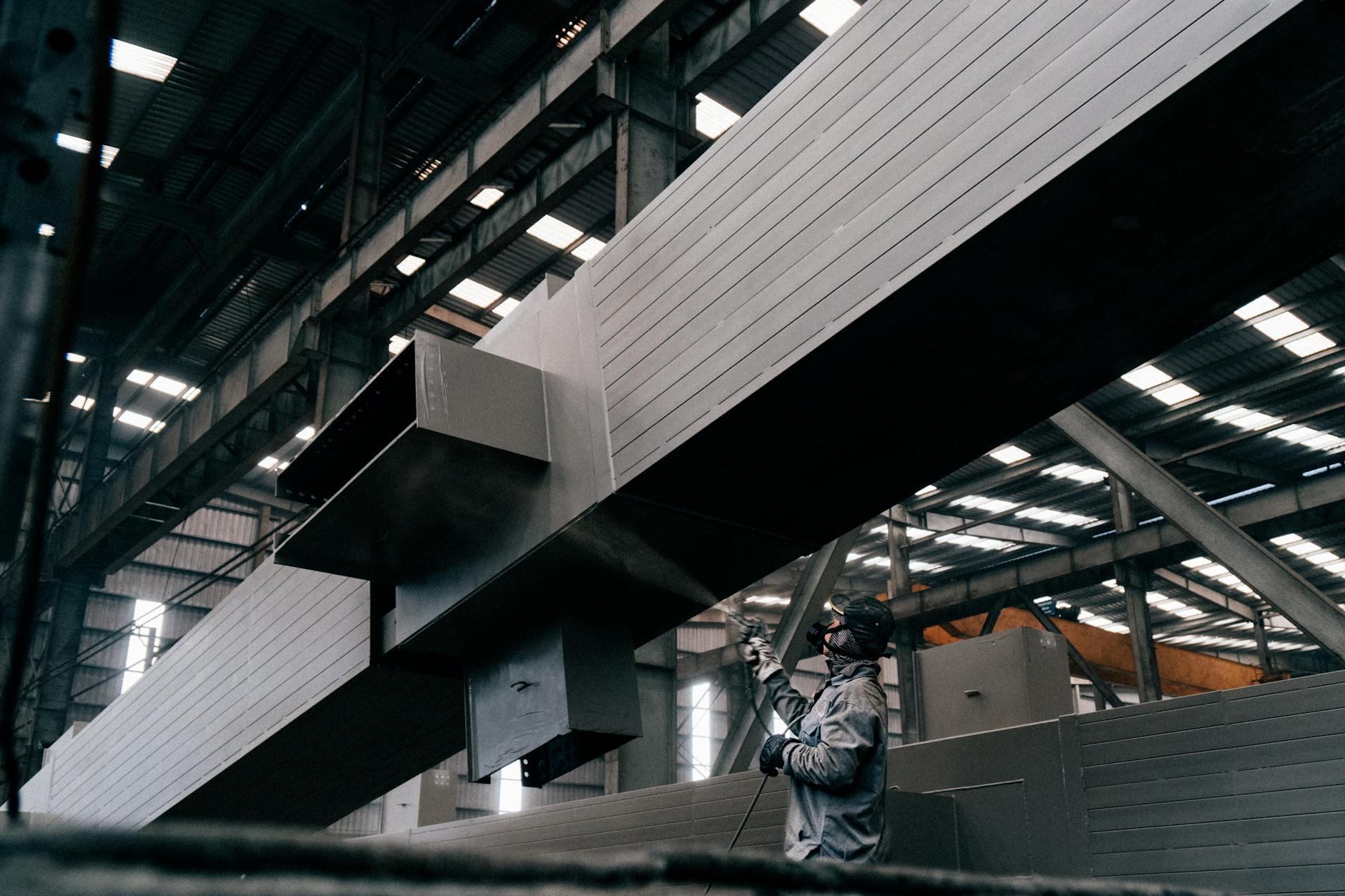
The finishing department is where most quality differentiation occurs. Furniture finishing involves surface preparation (sanding, filling), primer application, colour coat application (lacquer, paint, or stain), and topcoat application. Each stage requires specific conditions — controlled temperature and humidity, dust-free environment, adequate drying time between coats — that determine whether the finished surface is consistent, durable, and accurately represents the approved colour and sheen specification.
A well-equipped finishing department uses spray booths with adequate extraction, automated or semi-automated spray application for consistency, UV curing equipment for high-durability topcoats, and systematic quality checks at each stage. A poorly equipped finishing department produces finishes with inconsistent colour, visible sanding marks, dust nibs, and surfaces that fail prematurely under commercial use conditions.
Veneer Application
For furniture finished with natural wood veneer — common in upscale hotel casegoods — the veneer department applies thin wood veneer sheets to panel substrates using press bonding. Veneer work requires precise panel matching (ensuring grain and colour consistency across adjacent panels), accurate trimming, and careful handling to avoid damage to the fragile veneer surface before topcoat application. Factories with experience in veneered hotel furniture maintain organised veneer storage by batch, use calibrated press equipment, and have quality checks for delamination and surface defects.
Upholstery
Upholstered components — chair seats and backs, headboards, bench cushions, sofa cushions — are produced in a dedicated upholstery department. The department works from frame components (solid wood or metal) through spring and webbing installation, foam cutting and application, and final fabric or leather application. Upholstery quality depends on frame construction, the quality and density of foam specification, and the skill of upholsterers in achieving tight, consistent cover application. Factories without dedicated upholstery departments typically subcontract this work to specialist workshops — acceptable if the subcontractor is vetted, problematic if it is not.
Quality Control
In a well-managed furniture factory, quality control is not a single end-of-line inspection — it is integrated throughout the production process. Receiving inspection checks incoming materials against specification. In-process inspection at assembly checks component dimensions and joinery quality. Finishing inspection checks colour, sheen, and surface quality against approved samples. Final inspection before packing checks the complete piece against specification for dimensions, finish, hardware function, and structural integrity.
Factories with integrated QC programmes maintain inspection records, track defect rates by product and production run, and have formal non-conformance resolution procedures. Buyers should ask to review these records during factory visits — not because the numbers are always reliable, but because the presence or absence of systematic documentation is itself informative about quality management culture.
Packing and Dispatch
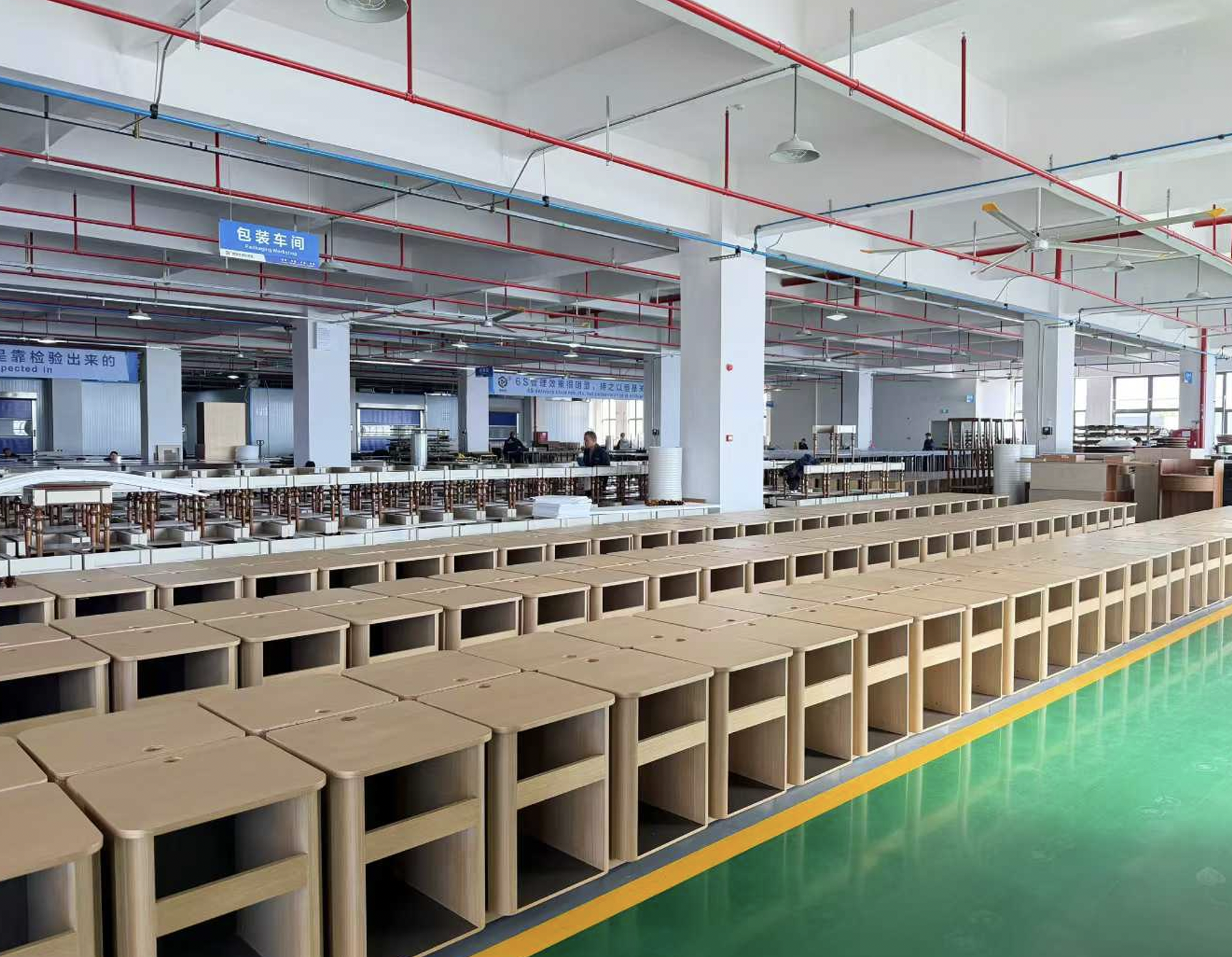
Furniture packing for export requires protection against the rigours of sea freight — vibration, compression from container loading, and moisture fluctuation. Adequate packing for hotel casegoods typically includes cardboard corner and edge protection, polythene wrap over finished surfaces, foam padding on high-risk areas, and structural crating for fragile or high-value items. The packing department is often the least scrutinised part of a factory visit but one of the most consequential — inadequate packing is a leading cause of transit damage that is not apparent until containers are opened at destination.
What Separates a Top-Tier China Furniture Factory from Mid-Tier
Buyers visiting Foshan factories for the first time often struggle to differentiate between factories of genuinely different capability. The observable differences between a top-tier hotel contract furniture factory and a mid-tier general furniture manufacturer include:
- CNC equipment investment: Top factories use multi-axis CNC machining centres that produce complex profiles with high precision and repeatability. Mid-tier factories rely more heavily on manual operations with associated variability.
- Dedicated hotel project division: Top-tier contract manufacturers have separate project management teams for hotel and commercial projects, with staff experienced in brand standard requirements and international project management.
- Finish sample library: A large, organised, current library of finish samples — veneers, lacquers, fabrics, hardware — indicates ongoing R&D investment and a production team that takes specification management seriously.
- Third-party inspection track record: Factories that regularly supply international hotel brands have experience with third-party inspection by firms like Bureau Veritas or SGS. Ask whether they have recent third-party inspection reports and request copies.
- Worker retention: Skilled furniture workers — particularly in finishing and upholstery — take years to develop. Factories with lower turnover produce more consistent quality. Ask about average worker tenure and how the factory manages skills retention.
Visiting a China Furniture Factory: A Practical Checklist
When planning a factory visit in Foshan, the following checklist helps ensure you cover the most important evaluation points:
Before the visit: Send your project specification in advance and request that the factory prepare finish samples and production examples relevant to your requirements. This transforms the visit from a general factory tour into a project-specific evaluation.
During the visit:
- Walk the entire production floor, not just the showroom. Request access to all departments.
- Ask to see the current order book and assess production scheduling against your timeline.
- Review finish samples against your specification requirements.
- Inspect current production pieces for finish quality, dimensional accuracy, and hardware installation.
- Ask to see a pre-shipment inspection report from a recently completed hotel project.
- Meet the project manager who would handle your account, not just the sales representative.
After the visit: Request a detailed quotation within five business days, specifying that quotations must be itemised by product with material specifications stated. Compare quotations across factories with the same specification baseline.
Chinify’s Factory Network
Chinify maintains an active network of vetted furniture factories in Foshan, selected through direct project experience across hotel and commercial interior assignments. We know which factories in the Foshan cluster are strongest for hotel casegoods, which produce the best quality commercial seating, and which are equipped for the complex custom fabrication requirements of high-specification hospitality projects.
If you are planning a hotel FF&E project and want to access Foshan’s best furniture factories with the assurance of independent vetting and ongoing quality oversight, contact Chinify to discuss your project.
Foshan Furniture Factories: What to Know Before You Visit
Foshan, Guangdong Province, is the largest furniture manufacturing centre on earth. The city and its surrounding districts — Lecong, Longjiang, Shunde, and Nanhai — house over 10,000 furniture manufacturers producing everything from mass-market flat-pack to bespoke hotel-grade casegoods shipped to five-star properties in 80 countries. If you are sourcing furniture for a hotel project and you have not visited Foshan, you are making procurement decisions with a significant information gap.
This guide covers everything a hotel developer, procurement manager, or interior designer needs to know before boarding a flight to Guangzhou: which districts to visit, how to prepare, what to look for, and how to avoid the most common mistakes that first-time visitors make.
Why Foshan Is the World’s Furniture Capital
The concentration of furniture manufacturing in Foshan is not accidental. It developed over 40 years through a combination of geographic advantage (river access to Guangzhou port, then proximity to the Pearl River Delta’s deep-water terminals), government industrial policy, and the compounding effect of supply-chain clustering. When a region reaches a critical mass of manufacturers, the supporting industries — hardware suppliers, fabric wholesalers, wood traders, lacquer manufacturers, CNC equipment suppliers — follow. That supply ecosystem is now so dense in Foshan that a factory can source every component for a hotel bedroom within a 30-kilometre radius, same-day if needed.
The Lecong furniture market alone — a cluster of wholesale showrooms and manufacturer display centres along Lecong Avenue — covers over one million square metres of floor space. Walking it end-to-end in a single day is not possible. Visiting it without a plan and a sourcing contact who knows which floors to skip and which factories to prioritise is an expensive way to waste three days.
The Key Districts and What Each Specialises In
Foshan is not a single city in the Western sense. It is an administrative region containing several distinct manufacturing towns. Understanding which district specialises in which product category saves significant time:
- Lecong (Shunde District): The wholesale market hub. Hundreds of manufacturer showrooms concentrated in the Lecong Furniture Avenue cluster. Best for: seeing a wide range of products quickly, finding suppliers of upholstered seating, bedroom furniture, and hotel casegoods. Not ideal for: placing orders directly — the showroom staff often cannot access the factory production team.
- Longjiang (Shunde District): The production heartland for solid wood and engineered-wood furniture. More factory-direct, less showroom. Best for: custom casegoods, dining furniture, hospitality pieces requiring FSC-certified timber or complex joinery.
- Nanhai District: Strong in metal-frame furniture, outdoor and contract seating, and hospitality lounge pieces. Growing cluster for contemporary and designer-led hotel furniture.
- Dali / Lishui (Nanhai District): Soft goods — upholstered headboards, restaurant booth seating, custom cushion work. Strong overlap with fabric and leather trading markets.

How to Prepare Before You Arrive
The single biggest mistake buyers make is arriving in Foshan without a clear specification package. Factory visits conducted with only a vague brief — “we need hotel bedroom furniture, good quality, competitive price” — produce nothing useful. The factories capable of hotel-grade work have limited time for unqualified visitors and will route you to showroom staff rather than the production manager or the hotel projects division.
Before you arrive, prepare:
- FF&E schedule or item list: Specific pieces required, quantities per piece, dimensions, and any known specification requirements (wood species, finish family, hardware standard).
- Reference images: Pinterest boards, brand-standard references, or interior design drawings. Factories use these to assess complexity and assign the right team.
- Project brief: Hotel name, location, category (3-star, 4-star, 5-star, boutique), opening timeline, and whether this is a new build or renovation. This lets the factory assess whether the project is a fit for their capacity tier.
- Budget indication: Not a binding number, but a range. A factory producing for Marriott properties will not be competitive for a budget motel project, and vice versa.
If you are visiting through a sourcing agent, they will pre-qualify the factories on your shortlist and send your brief in advance so that the factory prepares relevant samples and the right staff for your visit. Cold-calling factories directly wastes the first half of every visit on orientation.
What to Look for During a Factory Visit
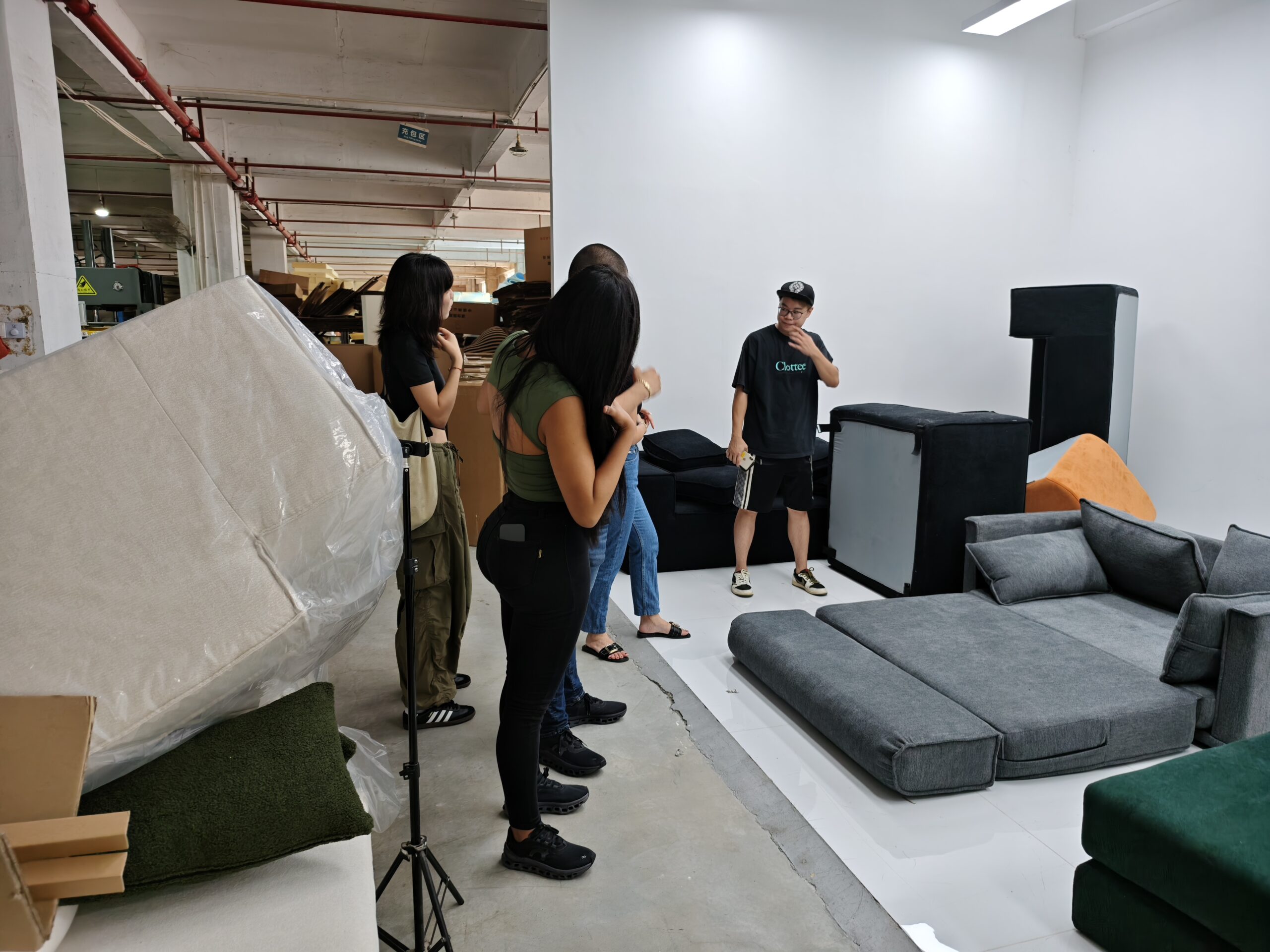
A factory tour is a quality audit whether you treat it as one or not. The information available to an observant visitor is significant. Key things to assess:
Production floor organisation: ISO-certified factories run organised production with clear work-in-progress staging, labelled zones, and systematic flow from raw material to finished goods. A chaotic floor — mixed inventory, unlabelled pieces, no quality-hold area — is a predictor of delivery and quality problems.
Finish quality on in-process work: Ask to see pieces at mid-production, not just finished samples. Look at how lacquer is applied and sanded, how veneer is laid and trimmed, how upholstery corners are pulled. A factory’s general production standard shows in the work-in-progress, not in the showroom piece they have been polishing for a year.
Sample room and reference projects: A credible hotel-grade factory will have a dedicated sample room showing completed guestroom sets, lobby pieces, and finish options. Ask to see photos of installed projects. Ask for hotel client references you can contact. A factory that cannot provide either has no hotel track record.
Export experience: For Latin American buyers, ask specifically about FCL (full container load) export to your destination port. Ask to see a previous packing list and bill of lading for a comparable order. A factory that exports regularly has the documentation process internalised; a factory doing its first export to Colombia will create delays.

Red Flags: What to Walk Away From
Experience across hundreds of factory visits produces a consistent list of warning signs:
- Reluctance to show the production floor: If a “factory” only shows you a showroom and declines to take you to manufacturing, you are dealing with a trading company (middleman), not a manufacturer. Trading companies add margin without adding manufacturing accountability.
- Inability to produce certifications on request: ISO 9001 certificates, FSC chain of custody, REACH compliance documentation, and fire-rating test reports should be available immediately, not “sent next week.”
- No English-speaking project manager: Hotel projects require ongoing technical communication. A factory where only the salesperson speaks English creates a translation layer between you and the people making decisions about your order.
- Extremely low quoted prices: If the quote is 40 percent below every other comparable factory, the factory is either misunderstanding your specification, planning to substitute materials, or pricing to win the order with the intention of value-engineering the production. Sustainable hotel-grade pricing has a floor; anything below it is a risk.
Sampling and Prototyping Process
Before committing to a full production order, require a first-article prototype (FAP) of the most complex or most quantity-heavy piece in your specification — typically the guestroom bed frame or the main lounge chair. The FAP process runs as follows:
- Submit technical drawings, finish sample, and hardware specification
- Factory produces one unit at production cost (USD 300–800 for a typical casegood piece)
- You or your representative physically inspects the sample — dimensions, joinery, finish match, hardware function
- Comments are documented with photos and submitted back for revision
- Factory produces revised sample
- On approval, the approved sample is sealed, photographed, and stored as the production standard for pre-shipment inspection
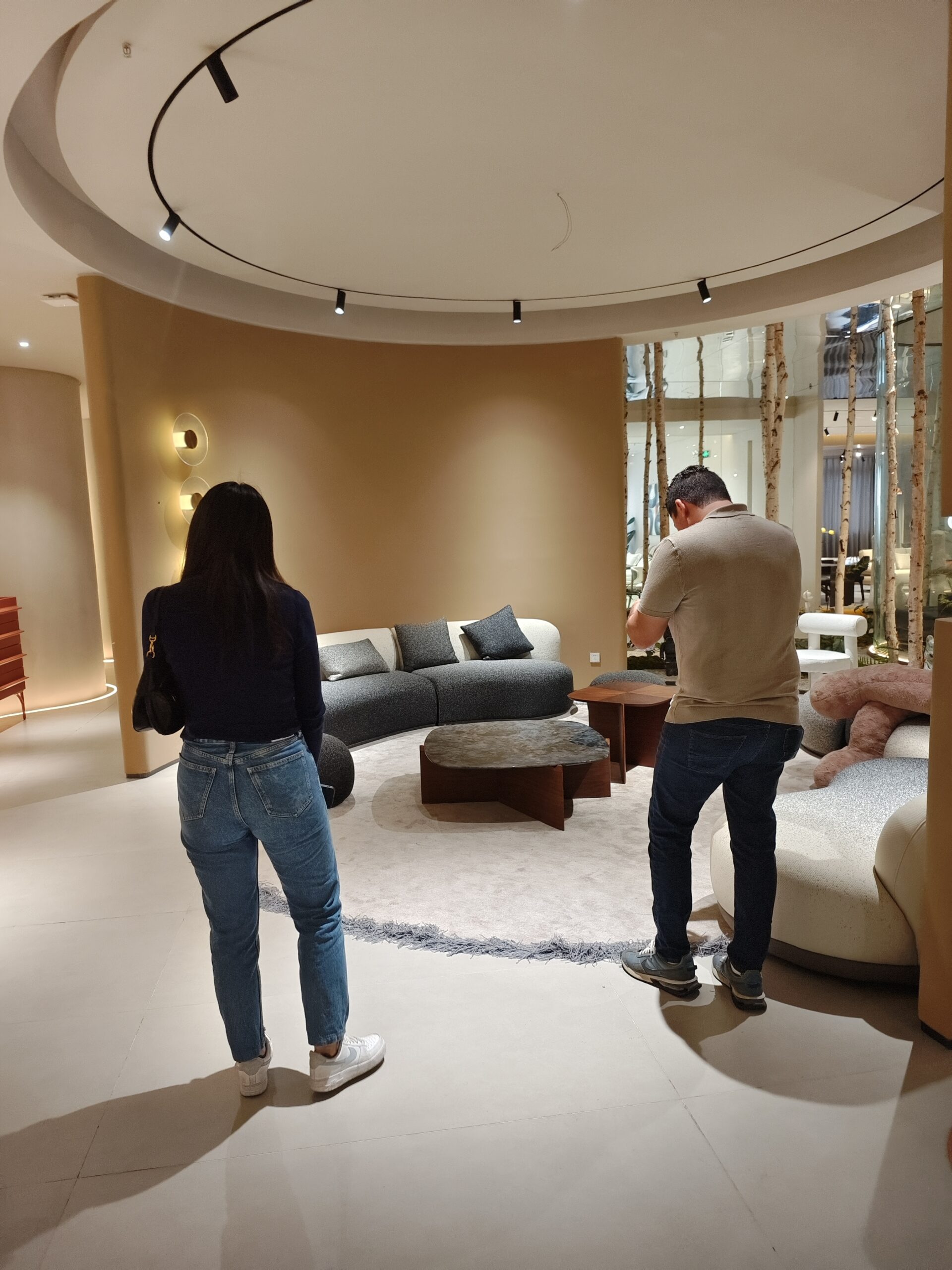
The FAP adds four to six weeks to the overall timeline but eliminates the most expensive category of problem: receiving a full production run that does not match the specification.
Negotiating and Building Long-Term Relationships
Chinese business culture places high value on relationship continuity. A factory that knows you are a recurring buyer — returning for your next hotel project, providing referrals to other developers — will prioritise your production schedule, resolve quality issues faster, and gradually improve pricing as the relationship matures. Factories that receive one-off transactional orders and nothing more treat them accordingly.
Payment terms for hotel-grade orders are typically: 30 percent deposit on confirmed purchase order, 70 percent against inspection approval and before loading. Do not agree to 50/50 structures on a new factory relationship — the 70% balance gives you leverage to enforce the quality standard at inspection. Do not pay 100% upfront under any circumstances.
Planning Your Foshan Visit with Chinify
Chinify offers guided factory tours in Foshan for hotel developers and interior designers with active sourcing projects. We pre-select factories based on your project specification, arrange technical meetings with hotel-projects divisions, facilitate sample room reviews, and manage the communication in Mandarin throughout. A three-day Foshan visit with Chinify produces actionable factory shortlists, approved sample agreements, and a clear production timeline — outcomes that typically take three to five unguided visits to achieve.
If you are planning a sourcing trip, contact us at least four weeks in advance so we can pre-qualify your factory shortlist and arrange the technical meetings.
Conclusion
Foshan rewards preparation. Developers and designers who arrive with a clear brief, a structured factory shortlist, and a protocol for what they are evaluating come away with production-ready supplier relationships in three days. Those who arrive without preparation spend a week in showrooms and leave with business cards and no concrete next steps.
The factories capable of delivering five-star hotel furniture to international brand standards exist in Foshan. Finding them, verifying them, and building the supply relationship that produces consistent results across multiple projects is what transforms a sourcing trip into a competitive advantage.